Comparing Different HDMI Standards
HDMI cable standards differ: High Speed is rated 10.2 Gbps, Premium High Speed 18 Gbps for 4K60, and Ultra High Speed 48 Gbps for 8K60 and 4K120.



HDMI comes in many shapes, sizes, types, and forms. Whether you are setting up a simple audio system or you are looking to expand your AV systems buildout with some fancy new features, you need to know exactly what kind of HDMI cable you need to get. But what is the difference between all of these different types of HDMI cables? Our Kanex experts will compare normal HDMI vs. fiber-optic HDMI in order to determine which kind of cable is best for you.
Fiber optics cables are made up of several parts. The transmitter transmits light signals and the optical fiber allows it to move long distances.
If the light has to travel long distances, optical regenerators can boost the signals. An optical receiver then waits at the other end to receive it. Once the code has been received, network signals will be sent.
Fiber optics are becoming more popular as they offer faster and better connections. Fiber optics offer many benefits for your specific needs.
It is flexible and does not require any electrical current, so it can be used in many industries. It is also used in medical imaging because small cameras fit easily through it. This is the best way for a direct connection to any two items.
Standard cables are the simplest type of HDMI cable. However, they are becoming increasingly less popular and are beginning to wear out. These cables can be used to support 720p and 1080i, with a maximum bandwidth of 5Gbps. You might need a higher-end HDMI cable if you want to support 4K video.
High-speed HDMI cables are available in most shops and can support 4K and 1080p. This standard cable is suitable for anyone who needs to run at slightly higher speeds, but doesn't require more money. High-speed HDMI cables are used by many computer devices, including Blu-ray players and gaming consoles.
HDMI cables are capable of supporting many speeds, but they cannot be used to speed up older devices that might not be able to handle such large bandwidth. HDMI and Ethernet cables can be used to improve the speed of your Internet connection as well as your AV setup.
Most HDMI cables can be used to transfer any type of video or audio, regardless of their quality. However, there are different types of connectors and cables that might be better suited to your particular setup.
We offer an extensive range of HDMI and fiber-optics cables, including our newest active fiber high-speed HDMI cable selections for any kind of AV setup. Talk to one of our experts today to discuss the best options for improving your AV setup.
The Kanex Pro experts are AV system manufacturers who offer the very best in ultra-HD technology. Fiber optics can transform the way you transmit and receive information as well as the quality of that information. We want you to have the very best, which is why we encourage you to get in contact with us today to learn more.
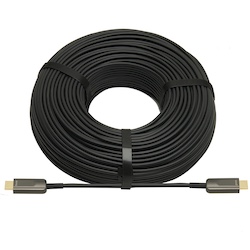
HDMI cable standards differ: High Speed is rated 10.2 Gbps, Premium High Speed 18 Gbps for 4K60, and Ultra High Speed 48 Gbps for 8K60 and 4K120.
HDMI cables have become the standard in many homes and offices over the last decade. They are helpful cables that transmit audio and video from…
HDMI cables are a necessary part of any tech setup at home or at work. They provide the clear and effective transmission of both audio and video…
KanexPro sells direct to dealers, resellers, installers and integrators, and through distribution. Whichever way you buy, the same engineers answer the phone.
The trade store: your own account, live stock, reordering, and a first look at new products.
Go to the trade store →Distribution and authorised resellers across the US and beyond.
See where to buy →Design help on extenders, matrix and AV over IP before you spec it.
Ask an engineer →