What Is a Flex Modular Matrix Switcher and Why Pro AV Installers Are Switching to It in 2026?
If you have been in the pro AV world for any length of time, you know how fast things change. What worked perfectly for a client three years ago…



In today’s changing audiovisual world companies and organizations need systems that are powerful can be scaled up or down are flexible and easy to manage. The old ways of distributing visual signals often struggle to keep up with the modern requirements like 4K and 8K video sending signals to many rooms and working smoothly with internet-based systems. This is where the concept of a matrix comes in.
A flex matrix is changing how audiovisual signals are sent, managed and scaled up or down in places like offices, schools, control rooms and big entertainment venues. By using hardware parts like flex card components and a flex chassis this approach gives unmatched flexibility and performance.
Let’s break down how this system works and why it’s becoming the base of audiovisual distribution.
At its core, a flex matrix is a system for switching and distributing audiovisual signals. It sends audio and video signals to many places efficiently. Unlike the fixed matrix switchers that have a set number of inputs and outputs a flex matrix lets you customize and expand your setup as needed.
This flexibility is achieved by using modules and a central housing unit. Instead of replacing the whole system when requirements change, users can simply upgrade or swap individual components. The result is a scalable and future-proof solution that adapts to evolving audiovisual demands.
A card is one of the most important parts of a flex matrix system. These are input/output cards that handle specific signal types like HDMI, DisplayPort, SDI, or audio formats. Each flex card is designed to do a job, which lets users tailor the system based on their needs. For example one setup might need HDMI inputs for conference rooms while another may need SDI for broadcast applications.
1. You can customize the system exactly as you need it.
2.You can easily upgrade the system by swapping out a card for a newer version that supports higher resolutions or new formats.
3. Maintenance becomes simpler because individual cards can be replaced without affecting the system. This is especially important in environments where downtime is not acceptable.
In a designed flex matrix, the flex card system ensures that your audiovisual infrastructure remains adaptable and efficient over time.
The chassis is the base of the whole system. It is the frame that houses all the modular cards and provides the power cooling and connectivity required for operation. Think of the chassis as the central hub where all processing and routing takes place.
1. It brings together all modules, enabling seamless communication between them.
2. Most chassis systems are designed with slots allowing users to add or remove modules as needed. This makes scaling your matrix system straightforward.
3. High-quality chassis systems are built with redundancy features like power supplies and advanced cooling systems, ensuring uninterrupted performance.
4. With everything housed in a unit, managing and monitoring the system becomes easier, especially when combined with software control interfaces.
A robust flex chassis ensures that the flex matrix operates smoothly in demanding environments.
A flex matrix works by sending signals from input sources to many output destinations using a combination of installed modules. Here is a simplified breakdown:
Signals from input sources like laptops, cameras and media players are connected via flex cards.
The system. Routes these signals internally within the chassis.
Output flex cards send the signals to displays, projectors or recording systems.
Because everything is modular, users can design a system that perfectly matches their workflow.
1. Unmatched flexibility is the advantage of a flex matrix. Whether you need to support formats expand to additional rooms or reconfigure signal paths the system adapts without major overhauls.
2. It has a proof design. With changing audiovisual technologies investing in a rigid system can quickly become outdated. A flex matrix allows for upgrades ensuring longevity.
3. It is cost-efficient. While the initial investment may be higher the ability to upgrade components like a flex card or expand via the flex chassis reduces long-term costs significantly.
4. It supports bandwidth signals like 4K and 8K video ensuring top-quality output across all endpoints.
5. Many systems integrate with advanced control software, allowing users to manage routing, monitor performance, and troubleshoot issues from an interface.
In offices and conference rooms a flex matrix enables switching between multiple presentation sources and displays. Teams can collaborate effectively without technical disruptions.
Schools and universities benefit from audiovisual systems that can adapt to different teaching scenarios. Lecture halls, labs and auditoriums can all be connected through a matrix.
In broadcasting, where reliability and signal quality are critical, the combination of flex card modules and a strong flex chassis ensures uninterrupted operations.
Mission-critical environments like security or traffic control centers require real-time data distribution. A flex matrix ensures that operators have access to the information at the right time.
Entertainment and Events-
From concerts to large venues flexible audio visual routing allows event organizers to manage complex setups efficiently.
Matrix switchers come with fixed input/output configurations. If you outgrow the system you often need to replace it
In contrast a flex matrix offers expansion, easier maintenance, better scalability and lower long-term costs. This makes it a sustainable choice for modern audiovisual needs.
Before investing in a matrix system, consider the following:
1. Plan for scalability. Choose a chassis with enough slots to accommodate future expansion.
2. Ensure that the flex card options support the types and resolutions you need.
3. Look for systems with redundancy features to minimize downtime.
4. A good control interface can significantly improve user experience and efficiency.
5. Balance initial costs with long-term savings offered by upgrades.
The demand for scalable and high-performance audiovisual systems will only continue to grow. As organizations adopt work models, smart classrooms and advanced digital infrastructures the need for adaptable solutions becomes even more critical.
The flex matrix model is well-positioned to meet these demands. With its design powered by flex card components and a reliable flex chassis it provides a foundation that can evolve alongside technology.
Emerging trends like visual over internet protocol, cloud-based control systems and artificial intelligence-driven automation are likely to integrate seamlessly with flex matrix architectures further enhancing their capabilities.1. What is a flex matrix?
A flex matrix is an audiovisual system that sends many audio and video signals using interchangeable components for flexible and scalable distribution.
2. What is a card?
A flex card is a plug-in module used in a matrix to handle specific input or output signal types like HDMI or SDI.
3. What is a flex chassis?
A flex chassis is the hardware unit that holds flex cards and provides power, cooling and system connectivity.
4. Can a flex matrix be upgraded?
Yes it can be easily upgraded by adding or replacing cards without changing the whole system.
5. Where is a flex matrix used?
It is used in offices, schools, studios, control rooms and large event venues, for visual signal management.
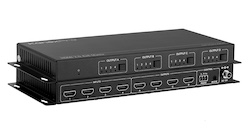
If you have been in the pro AV world for any length of time, you know how fast things change. What worked perfectly for a client three years ago…
The countdown to the FIFA World Cup 2026 has started and for companies that deal with hospitality, sports and entertainment this tournament is a…
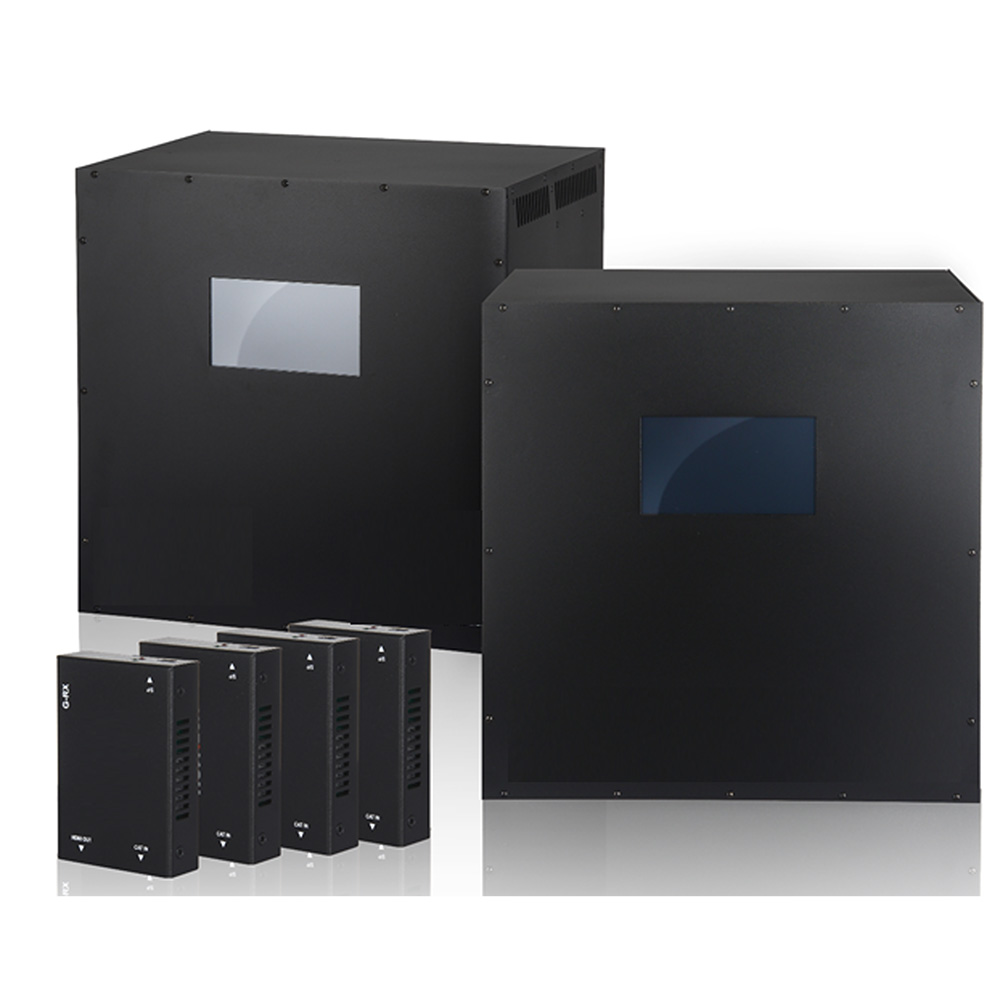
Modern AV environments demand more than simple point-to-point switching. Enterprises, universities, hospitality venues, government facilities, sports…
KanexPro sells direct to dealers, resellers, installers and integrators, and through distribution. Whichever way you buy, the same engineers answer the phone.
The trade store: your own account, live stock, reordering, and a first look at new products.
Go to the trade store →Distribution and authorised resellers across the US and beyond.
See where to buy →Design help on extenders, matrix and AV over IP before you spec it.
Ask an engineer →