KanexPro AV Technology Enhances Community Communications at Schools Boardroom
A Flexible Place for Meetings, Classes, and Professional Growth In today's fast-paced world, both schools and communities need to communicate…



SDI is a transmission protocol for sending uncompressed digital video signals. The signals are sent using a 75 Ohm coaxial cable. SDI stands for “Serial Digital Interface.” In 1989 the first standard SDI technology was invented and has since introduced a number of additional standards, including HD SDI (“high definition serial digital interface”); 3G (“three gigs per second”) SDI; 6G (“six gigs per second”) SDI; and 12G (“12 gigs per second”) SDI. Below you will find a helpful guide to SDI video.
Below you will find helpful information on SDI transmission cables and connectors so you can find what’s right for your project.
75 Ohm coaxial cables are used for SDMI transmission as they are rated for digital video signals. They come in a variety of sizes, conductor cores, and shielding. Digital 75 Ohm coaxial cables have at least double shielding.
There are various installation cables, including solid and stranded copper cores. Most have solid copper wires, but some have flexible cables made with stranded copper cores. Multiple small copper wires improve the flexibility of the cable. However, the drawback of this means that signals cannot be sent as far. This is because the internal resistance between the wires causes more attenuation of the video signal. A solid copper wire coax will likely have a longer transmission distance as attenuation is much lower.
Consider the following types of cables used for SDI video.
The Belden 1505A is an installation cable that has a foil shield around the dielectric and a braided copper shield over that. The dielectric is a white insulator around the conductor. These types of cables are less flexible and better suited for semi-mobile or fixed applications.
These are very thin, solid core coax cables. They are helpful and can be used as patch cords in mobile environments.
The Sommer Cable Vector+ 1.2L/4.8 have a double braided shield. This is meant to improve the cable's flexibility.
In some cases, coax cables need to be bundled. This is necessary for sending multiple signals at one time. This can be done with multi-channel coax cables as they are composed of multiple, separate coaxial cables. While these cables have a solid copper conductor, they are internally twisted around each other. This gives enough flexibility to be used in a mobile environment or on a cable drum.
There are a number of SDI connectors used for SDI video. Below you will find connectors that are standard in the broadcasting and entertainment industries.
This is the most common connector used for SDI coax cables. The bayonet style connectors are locked in by twisting them into their counterpart. These are used for 3G, 6G, and 12G transmission.
Also known as the Micro BNC, the HD BNC, has the exact same construction as the classic BNC. However, it is smaller. This provides users with the opportunity to place a higher number of connectors in the same amount of space.
The DIN 1.0/2.3 is similar in size to the HD BNC. However, it has a slightly different design. It also has a maximum frequency of 4Ghz.
If you are looking for the quick transmission of large amounts of uncompressed video HD-SDI is the top choice. An HD-SDI converter can convert HDMI signals from a PC or HD camera to an SDI monitor. No matter what your AV systems needs are, the team at Kanex Pro are skilled in finding what’s right for your specific projects. Contact Kanex Pro today for all of your AV project needs.
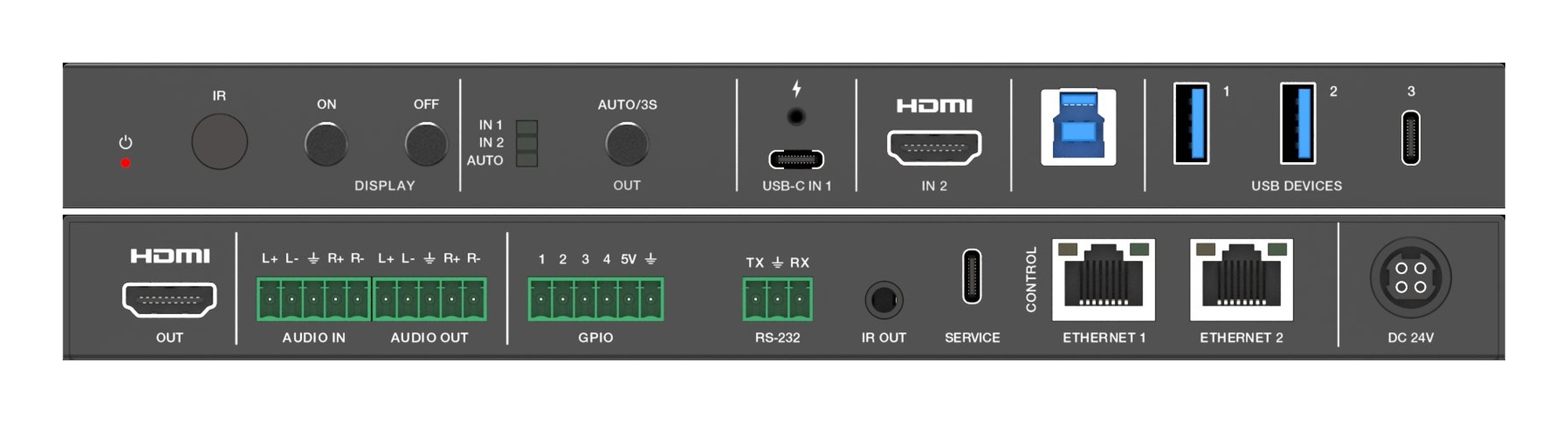
A Flexible Place for Meetings, Classes, and Professional Growth In today's fast-paced world, both schools and communities need to communicate…

An HDMI to SDI converter lets HDMI devices feed SDI switchers, recorders and monitors over long, locking coax runs. Key features and return-feed tips.
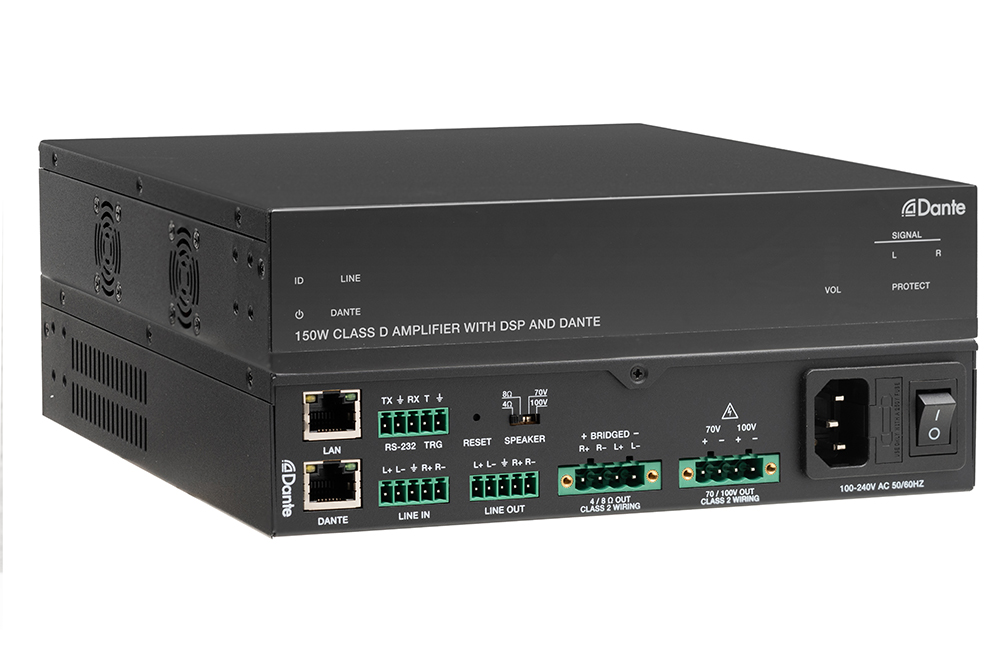
When it comes to broadcasting live events or even streaming for home entertainment purposes, there are a variety of options for transmitting audio…
KanexPro sells direct to dealers, resellers, installers and integrators, and through distribution. Whichever way you buy, the same engineers answer the phone.
The trade store: your own account, live stock, reordering, and a first look at new products.
Go to the trade store →Distribution and authorised resellers across the US and beyond.
See where to buy →Design help on extenders, matrix and AV over IP before you spec it.
Ask an engineer →