Feed a soundbar and an amplifier from one eARC adapter, not two
When one TV eARC port has to feed a soundbar and an amplifier, spec one adapter with both HDMI audio outputs instead of chaining two extractors.



Whether you are first setting up your new AV systems or you are looking to make the switch to HDMI, you might be interested in learning more about the products you are assembling. As the world’s leading video-carrying component, HDMI cables (or High-Definition Multimedia Interface cables) are a top choice in all types of AV communication.
We know that HDMI is a superior video source, but can it carry audio signals as well? And if so, how does HDMI audio work? If you want to get your digital network set up the right way, this is the perfect time for a deep dive into HDMI. Let’s get started.
A lot of people wonder why HDMI cables are necessary for an all-sound setup. No matter what kind of function your AV system serves, it’s good to use updated cables not just for proper audio/video carrying but for high-quality transmission. It is also the best digital replacement for old analog pieces as it is almost universally adaptable.
With HDMI, you will be able to effectively carry digital audio and video signals through the same cable without suffering any loss of quality. It declutters your space by requiring fewer wires, helping your system look ultra-organized in any personal or professional setting.
It should be noted that HDMI does not carry analog audio, only digital audio. There is an important difference between these two that should be understood before you continue purchasing items for your system.
Audio is the electrical representation of sound. Because of that, it can be sent between signals, stored, played, and looped in whatever fashion you with. Analog audio cannot do any of those things as easily, as it is constantly switching between electrical currents and converting different forms of energy. Digital audio, on the other hand, can be transmitted via waveform and does not degrade. HDMI cables are capable of carrying digital signals across channels.
HDMI has the ability to transmit audio that is either compressed or uncompressed without sacrificing the quality of sound. Additionally, there are no device delays that cause you to wait several seconds before receiving the transmitted audio. Any modern device that is built nowadays is likely to come with an HDMI input. This allows you to be a bit freer with your sound settings, letting you adjust the system as you please.
If you have an encoded HDMI audio signal that you are looking to extract, there are several decoders and de-embedders on the market worth looking at. But how exactly do they work?
HDMI audio de-embedders let you take the sound out of one device and transmit it to another. HDMI cables have revolutionized this process by allowing for instant conversion without any loss, making it the product of choice for those looking to connect consoles and streaming devices to their audio systems.
Looking to make some major HDMI conversions in your older analog setup? Get in touch with the pros at Kanex Pro now to learn more about getting the right solution for your system. Making the switch to HDMI is not as painful as it seems, and it is certainly a lot more seamless than the analog cables of old.
Find the best HDMI audio de-embedder that will connect your older devices to your newer consoles without a hitch. Get a device with multiple output options to boost your multichannel audio support. With small devices like this, you’ll hear a big difference. Get on board with HDMI today.
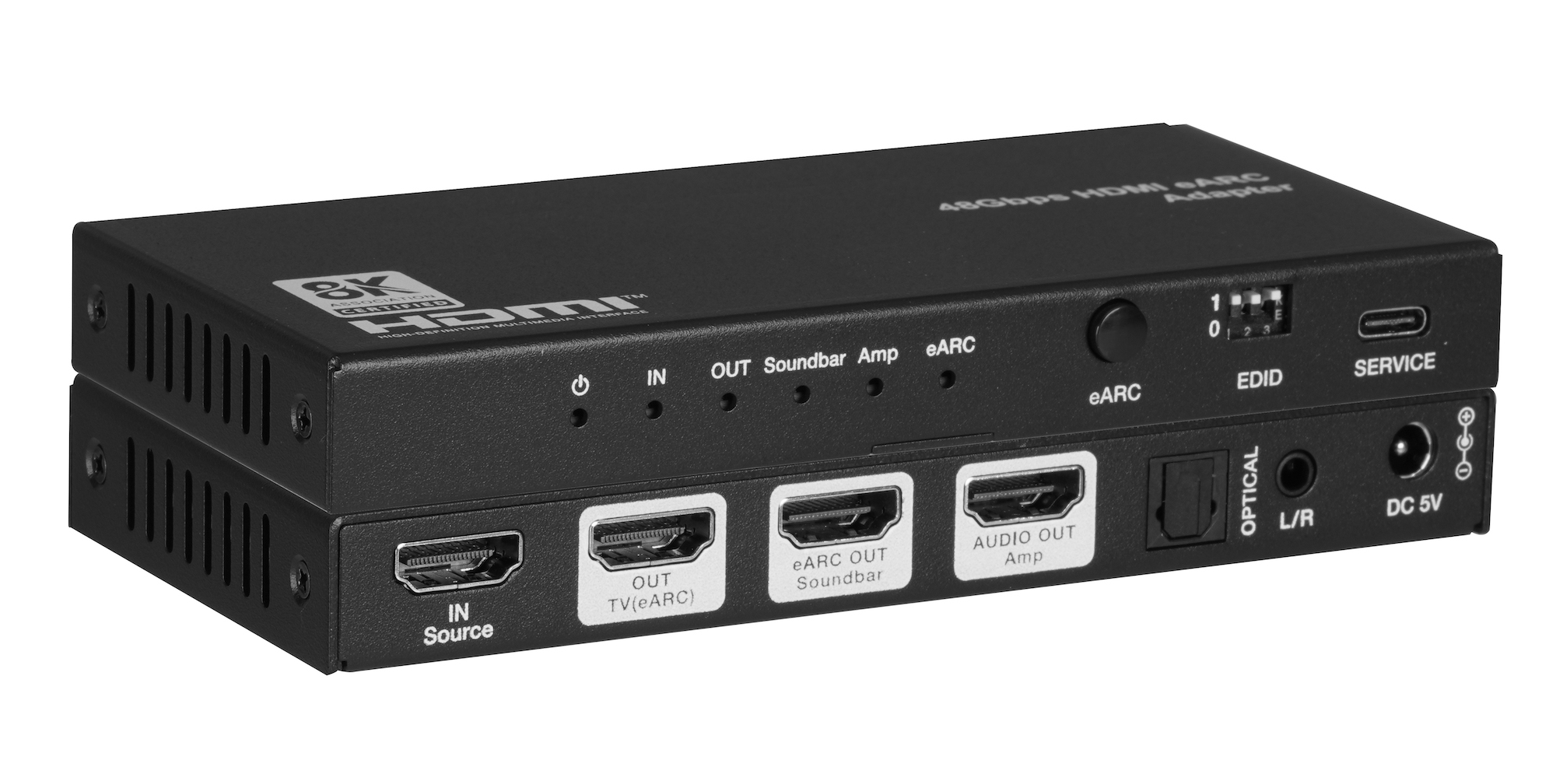
When one TV eARC port has to feed a soundbar and an amplifier, spec one adapter with both HDMI audio outputs instead of chaining two extractors.
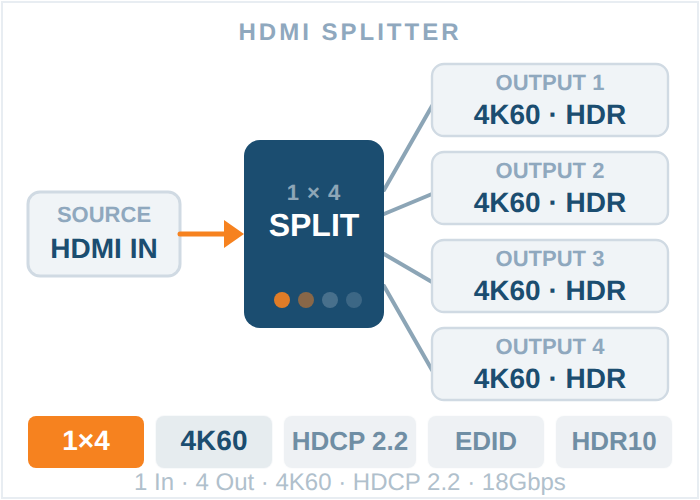
In today's world of high-definition television and audio systems that work in more than one room, it's important to make sure the signal is…
An HDMI distribution amplifier (DA) sends one HDMI input to several displays at once. How it differs from a splitter, and how to choose one.
KanexPro sells direct to dealers, resellers, installers and integrators, and through distribution. Whichever way you buy, the same engineers answer the phone.
The trade store: your own account, live stock, reordering, and a first look at new products.
Go to the trade store →Distribution and authorised resellers across the US and beyond.
See where to buy →Design help on extenders, matrix and AV over IP before you spec it.
Ask an engineer →