HDMI Distribution System Design: Splitters, Matrices, Scalers and Dante
Specifying an HDMI Distribution System: Splitters, Matrices, Scaling Switchers and Dante Audio Short answer: Choose the device by the shape of the…



Regardless of whether you’re a new tech kind of person or an old tech enthusiast, there is a significant change coming that nobody will be able to avoid: the USB-C. Changing universal port sizes is a huge deal. This is especially true for those who don’t have their hands on all of the latest and greatest pieces of technology, but still want to ride out their old devices as long as they can.
Since we at Kanex are passionate about providing you with the latest news and updates regarding your favorite devices, we want to be one of the first to tell you about all the new changes coming with USB Type C and how they will affect the range of available AV systems from Kanex Pro. We want to help answer your questions such as, “Will USB-C replace HDMI cables?”, and “Will USB-C replace other ports completely?” Below, you’ll learn more about what the USB-C is, why it is becoming more universally accepted, and where you can expect to start seeing it as new tech continues to roll out.
Ultimately, we expect the USB-C to replace older USB ports across the board. It won’t be too long before all new devices and machines are made with USB Type C, whereas the standard USB will become a thing of the past. This is because USB ports are everywhere - and they are the future.
If you have ever charged a cell phone, plugged a mouse into your computer, or transferred files to a flash drive, you are familiar with a standard USB port. All computers and laptops come with at least one, if not more. Most other machines and devices, such as tablets and video game consoles, also have a USB port. The USB-C takes things a step further by replacing older methods with faster and more accessible techniques to send data faster than ever before.
Many people believe that USB-C will definitely replace HDMI, while others aren’t so sure that HDMI will go away just because USB-C is rising in popularity. However, due to its advanced capabilities and AV qualities that run laps around traditional HDMI ports, it is only a matter of time before USB-C is the standard norm.
While USB-C technology has actually existed since 2014, it is only now coming around to being taken seriously as the new port of the future. The technology took some time to figure out, but it can be said with a lot more certainty now that USB-C will replace anything and everything, including:
Perhaps the biggest change that will come with the USB-C, though, is the port size. Like the USB-A ports of old, USB-C will force new technologies to adopt a new standard port size. While this might be an awkward and frustrating change at first, it will ultimately lead to a standard that everyone around the world can use.
There are talks of entire nations looking to adopt a standard port size for easier adaptation of future technologies. In fact, fairly recently, the United Nations voted to adopt a new cable standard across all of its countries. The EU voted with the consumer in mind, wanting to come up with a way to protect them from having to buy different chargers and different cables for every single device they purchase. This means that most of the world is on board with these changes, making it much easier to adapt.
All in all, the switch to USB Type C as a universal standard will be beneficial to everyone, from developers to consumers. While making a big change can be difficult to navigate at first, in the long run, it will result in much easier ways to adapt to new technology. That in itself encourages new technology to keep coming out.
You can still continue to utilize HDMI cables and ports as technology continues to develop. Many new devices have the ability to retroactively adapt to older ports. With the help of an HDMI distribution amplifier, you can stretch your connection to display on up to 8 different devices at a time. Get in touch with us to learn more about shopping for the next best AV system.
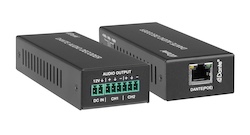
Specifying an HDMI Distribution System: Splitters, Matrices, Scaling Switchers and Dante Audio Short answer: Choose the device by the shape of the…
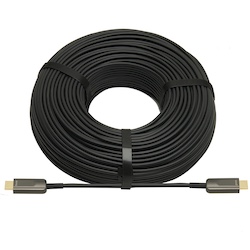
If your source is component video (the red, green, and blue RCA connectors), you need a component to HDMI converter. If it is composite video (a…
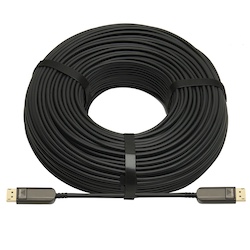
DisplayPort beats HDMI for high-refresh PC monitors and daisy-chaining; HDMI is the pick for TVs, consoles and projectors, and USB-C for laptops.
KanexPro sells direct to dealers, resellers, installers and integrators, and through distribution. Whichever way you buy, the same engineers answer the phone.
The trade store: your own account, live stock, reordering, and a first look at new products.
Go to the trade store →Distribution and authorised resellers across the US and beyond.
See where to buy →Design help on extenders, matrix and AV over IP before you spec it.
Ask an engineer →