HDMI Distribution System Design: Splitters, Matrices, Scalers and Dante
Specifying an HDMI Distribution System: Splitters, Matrices, Scaling Switchers and Dante Audio Short answer: Choose the device by the shape of the…



While wireless has taken over so much in the field of technology, cables are still integral in so many systems. There are a wide variety of cables depending on your source device, display device, and unique needs. This is especially true as devices are constantly being put out and replaced. With that, cables are a continuous consideration in any tech setup. You may wonder, are composite and component cables interchangeable? Below, you will find helpful information about the two so you can understand which one is right for you.
Composite and component cabless are two common types of cables. They are used to transmit video signals from various source devices to display devices. Common devices include televisions, projectors, and display monitors. In many ways, they are similar as they ultimately complete the same task. However, they have unique differences that are important to consider.
Composite and component cables offer unique features that are based on your unique needs. Consider the following differences between the two to ensure you purchase the right one.
Composite cables consist of three connectors. These are yellow, red, and white. The yellow connector is for video, and the red and white one are for audio. Composite cables carry both audio and video signals in just one cable. This makes them a convenient option when connecting devices.
However, the drawback is that the image quality may not be the very best. This is because the entire signal is transmitted in one cable. This can impact the resolution and color as compared to component cables.
Component cables are another helpful cable that connects your source and display devices. Unlike composite cables, component cables transfer visuals in three separate components. The components are referred to as luminance, red color difference, and blue color difference. These distinct cables result in higher image quality as compared to other cable options. In addition to the visual cables, there are red and white connectors used to transmit the audio.
Unlike composite cables, component cables offer distinct benefits. The cable separation results in improved image quality. In addition, the cables offer support for higher resolutions. This makes them a great option for connecting high-definition devices.
Composite and component cables both have unique purposes when it comes to audio-visual transmission. Composite cables are simple and convenient, while composite cables offer several unique benefits. If you have both formats and need to improve compatibility, consider a component converter. A component converter is a helpful device that can convert video signals from one format to another. Specifically, it can convert composite video signals to component video signals and component video signals to composite video signals. It effectively allows you to bridge the gap between various devices to streamline your tech setup at work at home.
If you are unsure which cable to choose, composite or component, contact Kanex Pro today. They are experts in tech as they carry a complete selection of products for all of your audio-visual connectivity needs. They provide top-tier products that are both reliable and cost-effective. Whether you are upgrading your home entertainment setup or improving your office tech setup, check out the selection at Kanex Pro today. Their team of experts can provide you with helpful advice to achieve your goals.
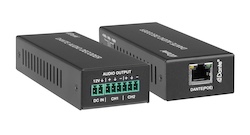
Specifying an HDMI Distribution System: Splitters, Matrices, Scaling Switchers and Dante Audio Short answer: Choose the device by the shape of the…
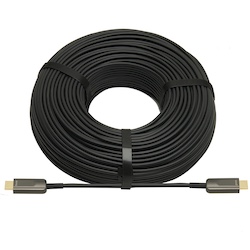
If your source is component video (the red, green, and blue RCA connectors), you need a component to HDMI converter. If it is composite video (a…
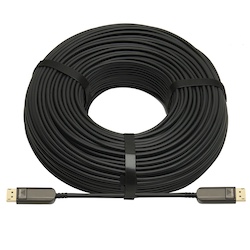
DisplayPort beats HDMI for high-refresh PC monitors and daisy-chaining; HDMI is the pick for TVs, consoles and projectors, and USB-C for laptops.
KanexPro sells direct to dealers, resellers, installers and integrators, and through distribution. Whichever way you buy, the same engineers answer the phone.
The trade store: your own account, live stock, reordering, and a first look at new products.
Go to the trade store →Distribution and authorised resellers across the US and beyond.
See where to buy →Design help on extenders, matrix and AV over IP before you spec it.
Ask an engineer →