Replace the Fixed HDMI Matrix Switcher with 10G AV over IP
A fixed HDMI matrix switcher locks a job to its port count. Uncompressed 10G AV over IP routes the same way with zero-frame latency and room to grow.


The pitch has become reflexive: move video onto the network, and the first line item is a parallel 10G switching fabric to carry it. That advice made sense when AV-over-IP meant uncompressed video, and uncompressed 4K needs the bandwidth a standard building network was never built for. It stopped being universally true the moment visually lossless compression got good enough to carry 4K60 4:4:4 over the 1G network already in the ceiling — and a lot of designs still spec the 10G fabric anyway, out of habit rather than need.
Uncompressed AV-over-IP standards exist for real reasons: zero-latency switching for broadcast production, or full 4:4:4 at every resolution a facility might ever run. Those jobs need the dedicated fabric, and no amount of compression should be argued into replacing it. But that requirement got generalized into "AV-over-IP needs its own 10G network," and that generalization now gets applied to jobs that are a laptop, a conference camera and a handful of displays — the corporate floor, the lecture hall, the courtroom — where the actual requirement was never uncompressed video, only clean 4K on-screen.
A parallel 10G network is not a free safety margin. It is a second network to design, a second set of switches to buy and manage, and a second thing for the IT department to approve before the AV system can go live — often the single slowest step in the whole project once IT has to sign off on hardware their team didn't choose and won't be maintaining day to day.
This isn't an argument that compression is free. A dedicated uncompressed fabric still wins on latency-critical production switching, and an installer running a live broadcast truck should not be talked into JPEG2000 over 1G to save a network build. The honest line is narrower: for corporate, higher-ed and courtroom systems where the requirement is clean 4K60 4:4:4 on a display, not frame-accurate production switching, visually lossless compression on the standard network the building already runs is not a compromise on picture quality — it's a compromise on nothing the room actually needs.
The AVO-IPJP2K-ENC distributes one 4K60 4:4:4 HDMI source to an unlimited number of displays over a standard 1G network, using JPEG2000 compression to stay visually lossless without the bandwidth uncompressed video demands. Copper and SFP fiber sit in the same box, selectable per run, so a single model covers both the in-building runs and the longer fiber links to another floor or building without carrying two SKUs. It drives point-to-point, matrix and video-wall topologies up to 9x9 with intelligent video-wall class management, and carries RS-232, two-way IR, CEC and USB 2.0/KVM across the same link the video rides — plus two relay and two GPIO contact-control channels for room automation, and license-activated Dante AV-A when the job needs networked audio too. That is a control and audio feature set some 10G platforms split across separate cards and separate licenses, running here on the network the client's IT team already owns.
The question worth asking before a 10G fabric goes on the quote isn't "does AV-over-IP need a dedicated network" — it's "does this specific job need uncompressed video." Broadcast production and zero-latency switching still do. A conference room, a lecture hall and a courtroom running 4K60 4:4:4 to a handful of displays don't, and speccing the parallel network anyway adds a second infrastructure project, a second IT approval, and a second point of long-term ownership to a job that the building's existing network was already capable of carrying.
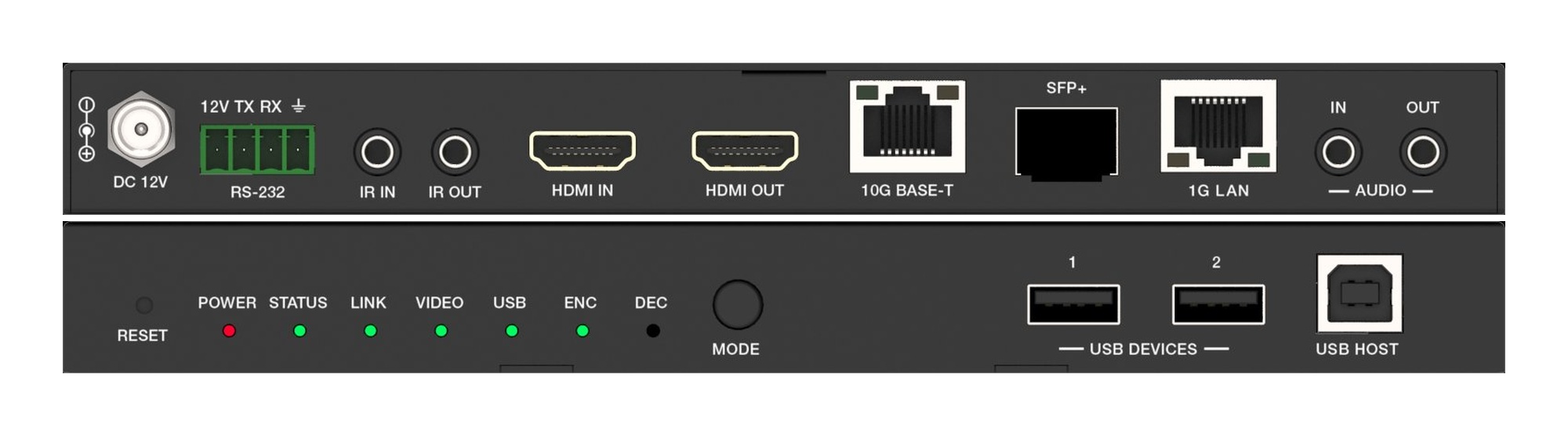
A fixed HDMI matrix switcher locks a job to its port count. Uncompressed 10G AV over IP routes the same way with zero-frame latency and room to grow.
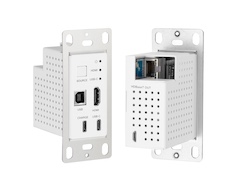
SDI Extenders, Signal Converters and Audio Matrix Switching: An AV Integrator's Buying Guide Which of these five you need depends entirely on the…
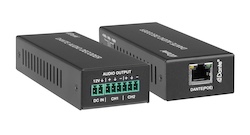
Specifying an HDMI Distribution System: Splitters, Matrices, Scaling Switchers and Dante Audio Short answer: Choose the device by the shape of the…
KanexPro sells direct to dealers, resellers, installers and integrators, and through distribution. Whichever way you buy, the same engineers answer the phone.
The trade store: your own account, live stock, reordering, and a first look at new products.
Go to the trade store →Distribution and authorised resellers across the US and beyond.
See where to buy →Design help on extenders, matrix and AV over IP before you spec it.
Ask an engineer →