Replace the Fixed HDMI Matrix Switcher with 10G AV over IP
A fixed HDMI matrix switcher locks a job to its port count. Uncompressed 10G AV over IP routes the same way with zero-frame latency and room to grow.



The professional AV industry has rapidly shifted from traditional matrix switchers toward IP-based video distribution systems. As organizations demand scalable, flexible, and centralized AV infrastructures, AV over IP controllers have become the backbone of modern audiovisual deployments.
From corporate boardrooms and higher education campuses to command centers, digital signage networks, and entertainment venues, AV over IP controllers provide centralized management for routing, switching, video walls, KVM extension, and automation across distributed environments.
In this guide, we’ll explain what controllers are, how they work, key features to consider, deployment advantages, and why modern installations increasingly rely on centralized AV management platforms like those offered by KanexPro.
An AV over IP controller is the central management platform that controls and monitors AV over IP encoders, decoders, transceivers, and endpoints across a networked AV system.
Instead of relying on fixed hardware matrix switchers, AV over IP systems distribute video, audio, USB, and control signals through standard Ethernet networks. The controller acts as the “brain” of the system by handling:
• Source routing
• Matrix switching
• Video wall configuration
• Device discovery
• KVM management
• User access control
• Network communication
• Preset recall
• Automation workflows
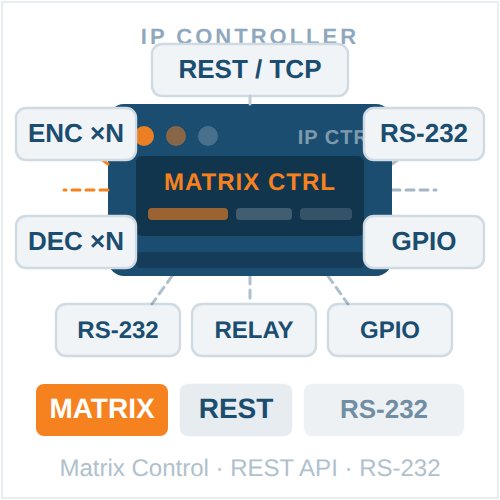
Modern controllers provide browser-based web GUIs, API integrations, RS-232 support, GPIO triggers, and remote management capabilities for complete centralized control.
Traditional AV matrix switchers are limited by fixed input/output capacities. Expanding a 16x16 matrix often means replacing the entire chassis.
AV over IP changes this model completely.
With IP-based infrastructures, systems become infinitely scalable because endpoints connect through managed network switches instead of dedicated matrix backplanes. According to discussions among AV professionals, large-scale AV deployments increasingly favor AV over IP because of scalability, flexibility, and easier expansion.
However, without centralized management, distributed AV systems become difficult to configure and maintain. That’s where AV over IP controllers become essential.
They simplify complex systems by providing:
• Centralized device management
• Unified routing interfaces
• Network monitoring
• Simplified installation workflows
• Easier troubleshooting
• Enterprise-level security
• Multi-user administration

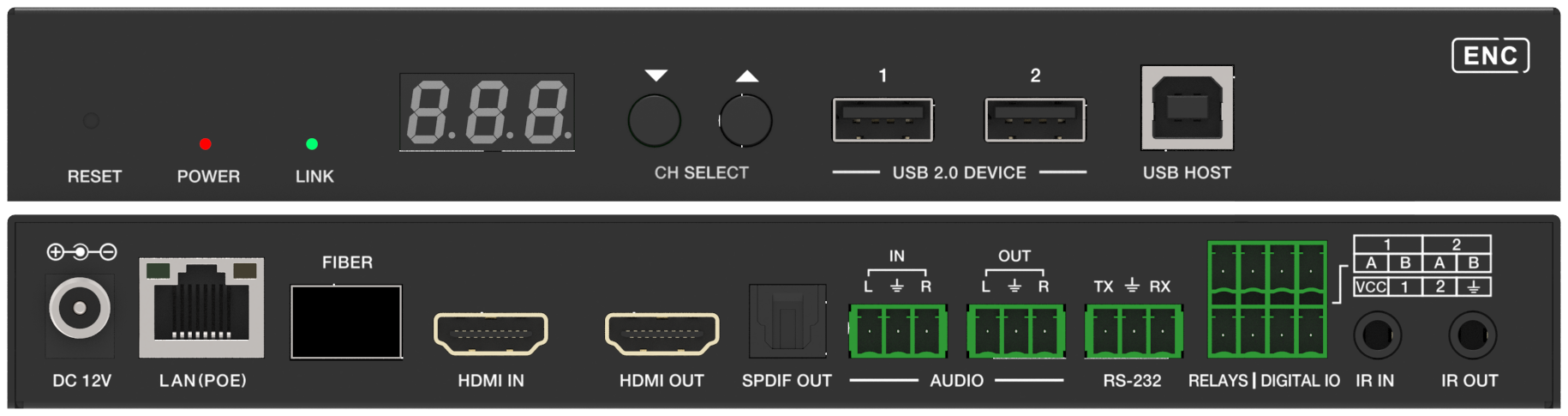
An AV over IP controller communicates with encoders and decoders connected to a managed network switch.
The controller automatically discovers all endpoints on the network and allows administrators to route sources to displays using a graphical interface.
For example:
• A Blu-ray player connected to Encoder 1
• A digital signage player connected to Encoder 2
• Multiple displays connected to decoders
Using the controller interface, users can instantly:
• Send Source 1 to all displays
• Create independent zones
• Build video walls
• Switch sources dynamically
• Schedule routing presets
Modern AV over IP controllers use protocols such as:
• TCP/IP
• HTTPS
• SSH
• RS-232
• IR
• GPIO
Controllers also integrate with third-party systems like Crestron, AMX, Savant, and Control4 for enterprise automation.
One of the most important features is centralized matrix routing.
Controllers allow users to perform:
• One-to-one routing
• One-to-many routing
• Many-to-many switching
• Broadcast routing
• Drag-and-drop matrix assignments
Unlike traditional hardware matrix switchers, systems eliminate physical port limitations.
The KanexPro AVO-IPCTL series supports drag-and-drop matrix switching directly from a web GUI interface.
Video walls are now common in:
• Control rooms
• Retail environments
• Sports bars
• Universities
• Corporate lobbies
• Transportation hubs
AV over IP controllers simplify video wall creation by allowing integrators to configure layouts directly through software.
Advanced controllers support:
• Window roaming
• Preset layouts
• Multi-screen splicing
• Marquee displays
• Dynamic resizing
• Seamless transitions
The AVO-IPCTL-265 supports advanced video wall features including window roaming and seamless switching.
Meanwhile, the SDVoE-based AVO-IPCTL-SDV supports video walls up to 9×9 configurations with zero-frame latency performance.
Many enterprise deployments require USB and KVM support for remote workstation control.
Modern Controllers allow:
• Keyboard and mouse routing
• USB peripheral sharing
• Remote workstation access
• Multi-user collaboration
This capability is especially important in:
• Security operation centers
• Healthcare imaging
• Financial trading floors
• Command centers
The KanexPro SDVoE controller supports USB 2.0 KVM routing across AV zones.
Browser-based interfaces have become the industry standard.
Web GUIs eliminate the need for proprietary software installation while simplifying remote management.
Benefits include:
• Remote administration
• Simplified setup
• Real-time monitoring
• Cross-platform compatibility
• Faster troubleshooting
AV over IP controllers provide centralized browser-based management with automatic endpoint discovery.
Enterprise AV deployments must maintain network security while isolating multicast AV traffic.
Modern controllers support:
• Dual-network isolation
• HTTPS encryption
• SSH access
• Role-based permissions
• VLAN support
• Password authentication
Controllers feature dedicated VIDEO LAN and CONTROL LAN ports to separate AV traffic from corporate IT infrastructure.
Scalability is one of the biggest reasons organizations migrate toward AV over IP.
Instead of replacing matrix hardware, administrators simply add:
• More encoders
• More decoders
• Additional switches
• Extra displays
Large deployments with dozens or even hundreds of endpoints become manageable through centralized controllers.
AV professionals on Reddit consistently highlight scalability as a major advantage of AV over IP systems over traditional matrix switchers.
H.264 / H.265 Controllers

These controllers prioritize bandwidth efficiency and affordability.
Ideal for:
• Education
• Digital signage
• Conference rooms
• Corporate campuses
H.265 compression significantly reduces bandwidth requirements while maintaining high-quality video transmission.
KanexPro offers both:
• 100M H.265 controllers
• 1G H.265 controllers
depending on deployment requirements.
SDVoE Controllers
SDVoE controllers prioritize:
• Zero-frame latency
• Visually lossless 4K60 4:4:4
• High-performance KVM
• Mission-critical applications
Best suited for:
• Esports
• Simulation environments
• Broadcasting
• Medical imaging
• High-end command centers
The AVO-IPCTL-SDV is designed specifically for demanding SDVoE environments.
Without centralized control, managing dozens of AV endpoints becomes operationally complex.
Controllers simplify workflows through:
• Single-dashboard visibility
• Preset automation
• Device grouping
• Central firmware management
AV over IP systems leverage standard network switches instead of proprietary matrix hardware.
Benefits include:
• Lower cabling costs
• Easier expansion
• Reduced hardware replacement
• Simplified upgrades
Centralized controllers allow administrators to:
• Identify offline devices
• Monitor endpoints
• Update firmware remotely
• Diagnose routing issues
This significantly reduces maintenance time.
Traditional AV infrastructures often require expensive hardware replacements when systems grow.
AV over IP systems expand incrementally by adding endpoints and switch capacity.
This modular architecture future-proofs investments.
Businesses use AV over IP controllers for:
• Conference room routing
• Executive boardrooms
• Digital signage
• Training rooms
Universities deploy centralized AV management for:
• Lecture halls
• Campus-wide streaming
• Distance learning
• Event spaces
Hospitals rely on AV over IP for:
• Surgical imaging
• Nurse stations
• Telemedicine
• Medical training
Command centers require:
• Real-time routing
• Video walls
• Low latency
• KVM control
SDVoE controllers are especially popular in these environments.
Organizations increasingly demand zero-frame latency and 4K60 4:4:4 performance.
SDVoE deployments are growing rapidly in high-performance AV environments.
Modern AV systems are beginning to integrate AI-powered monitoring and automation for:
• Predictive maintenance
• Network optimization
• Usage analytics
• Automated troubleshooting
AV and IT departments continue merging operational responsibilities.
Controllers now prioritize:
• Cybersecurity
• VLAN management
• API integration
• Enterprise authentication
Remote system monitoring is becoming standard for:
• Multi-campus deployments
• Managed service providers
• Remote diagnostics
When selecting a controller, consider:
How many endpoints will the system support today and in the future?
• H.265 = efficient and affordable
• SDVoE = ultra-low latency
Do you require:
• Multi-view
• Window roaming
• Dynamic layouts
• Seamless switching
Will users need:
• USB extension
• Keyboard/mouse routing
• Collaborative workspaces
Ensure support for:
• Crestron
• AMX
• Control4
• REST APIs
• RS-232
 We offers a comprehensive AV over IP ecosystem designed for modern enterprise AV deployments.
Key advantages include:
• Centralized web GUI control
• H.265 and SDVoE options
• Dual-network isolation
• Advanced video wall support
• USB KVM routing
• Enterprise-grade security
• Flexible scalability
• Managed switch compatibility
Whether deploying cost-effective H.265 systems or mission-critical SDVoE infrastructures, and provides scalable centralized management solutions for modern AV environments.
AV over IP controllers have transformed how organizations design and manage audiovisual systems.
As AV infrastructures continue moving toward network-based architectures, centralized management platforms are no longer optional — they are essential.
From matrix switching and video walls to KVM routing and enterprise security, modern AV over IP controllers deliver the scalability, flexibility, and operational efficiency required for today’s professional AV environments.
For organizations planning scalable AV deployments in 2026 and beyond, centralized AV management solutions. We provide the performance, reliability, and future-ready architecture needed to support evolving enterprise AV demands.
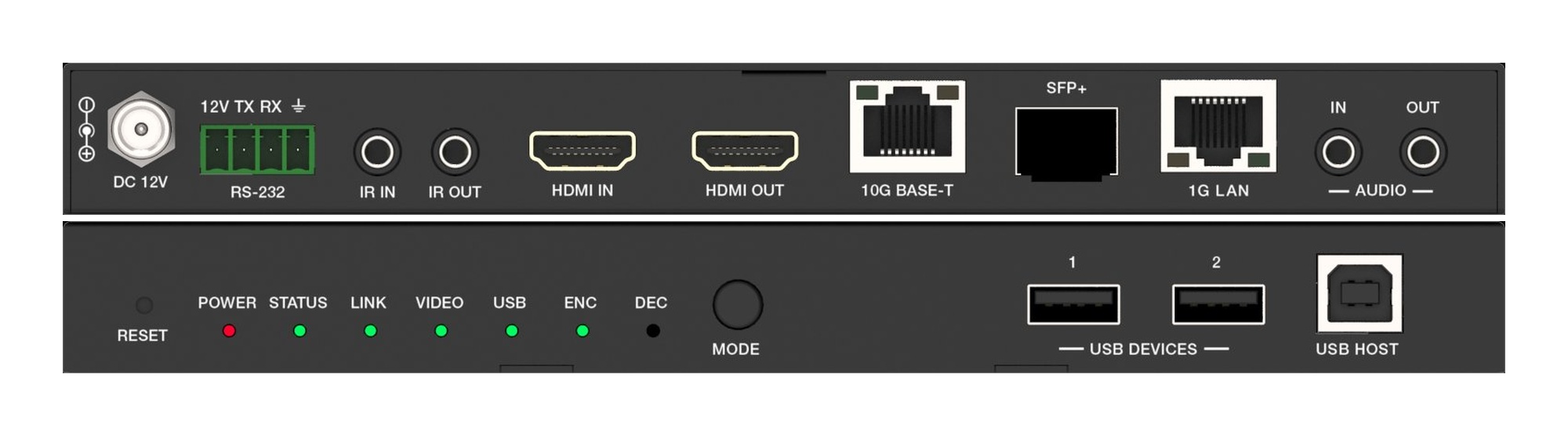
A fixed HDMI matrix switcher locks a job to its port count. Uncompressed 10G AV over IP routes the same way with zero-frame latency and room to grow.
The pitch has become reflexive: move video onto the network, and the first line item is a parallel 10G switching fabric to carry it. That advice made…
Every Second Matters in a Hospital - So Does Communication Walk into any modern hospital and you'll immediately notice something beyond the doctors…
KanexPro sells direct to dealers, resellers, installers and integrators, and through distribution. Whichever way you buy, the same engineers answer the phone.
The trade store: your own account, live stock, reordering, and a first look at new products.
Go to the trade store →Distribution and authorised resellers across the US and beyond.
See where to buy →Design help on extenders, matrix and AV over IP before you spec it.
Ask an engineer →