Downloading KanexPro software and firmware safely
How KanexPro checks firmware and software downloads, how to verify a file's SHA-256 fingerprint, what the Windows SmartScreen warning means, and…


Architecture, Scalability, I/O Flexibility, Feature Depth & TAA Compliance
When specifying an AV matrix switcher, integrators and end users face a choice that extends well beyond port count: fixed-configuration or modular architecture. The wrong decision at design time locks the client into a hardware replacement cycle that may cost more than the original system within five years. This white paper examines both architectures across scalability, total cost of ownership, feature depth, I/O flexibility, and procurement compliance.
A self-contained unit with a fixed number of inputs and outputs (e.g., 8×8, 16×16, 32×32). All I/O ports are the same type, typically HDMI. There is no field expansion or I/O type modification. For small, permanently stable deployments, this simplicity has genuine value.
Separates the switching engine (chassis) from the physical I/O (cards). The chassis provides crossbar capacity, control, power, and cooling. Cards slide into chassis slots to provide inputs and outputs. The installer selects a chassis sized for maximum anticipated I/O, then populates it with cards to match current requirements. The KanexPro FLEX-MF8X10 through FLEX-MF24X60 series are production examples.
Scaling a fixed matrix requires replacement. A client who installs an 8×8 and later needs 12 outputs must add a second matrix, purchase a 16×16 (paying for unused ports), re-architect to AV over IP, or accept the constraint. With a modular chassis, a fifth option exists: add an output card in 15 minutes without disturbing existing cabling or control programming.
| Scenario | Fixed Matrix | Modular (FLEX) |
|---|---|---|
| Need 4 more outputs on an 8×10 | Replace chassis, re-cable all endpoints | Add 1 output card (if slot available) |
| Need HDBaseT outputs for remote displays | Add external extenders separately | Swap card for FLEX-CAT12OUT |
| Grow from 16 to 24 inputs | New chassis + full re-installation | Add input cards or upgrade chassis |
Verdict: Modular wins decisively on scalability. For any installation where growth is possible, modular eliminates the forced replacement cycle.
Fixed matrix switchers are homogeneous — all inputs and outputs are HDMI. Mixed outputs require external extenders, creating a second management layer. A modular matrix handles mixed I/O natively. In the FLEX system, HDMI and CATx output cards coexist in the same chassis and are managed identically in the web GUI.
The FLEX Matrix includes all of the following as standard across all chassis sizes:
All KanexPro FLEX Matrix chassis and cards are TAA compliant — eligible for GSA Schedule, DoD contracts, NASPO/OMNIA cooperative purchasing, and E-rate (education/libraries). Many fixed-configuration matrix switchers are not TAA compliant, forcing government integrators to accept a less capable product.
Continued in Part 2: TCO Analysis, Deployment Scenarios & Conclusion
How KanexPro checks firmware and software downloads, how to verify a file's SHA-256 fingerprint, what the Windows SmartScreen warning means, and…
Boardrooms, conference rooms, campuses, lobbies — real-world deployment scenarios Corporate AV is among the most practical deployment target for…
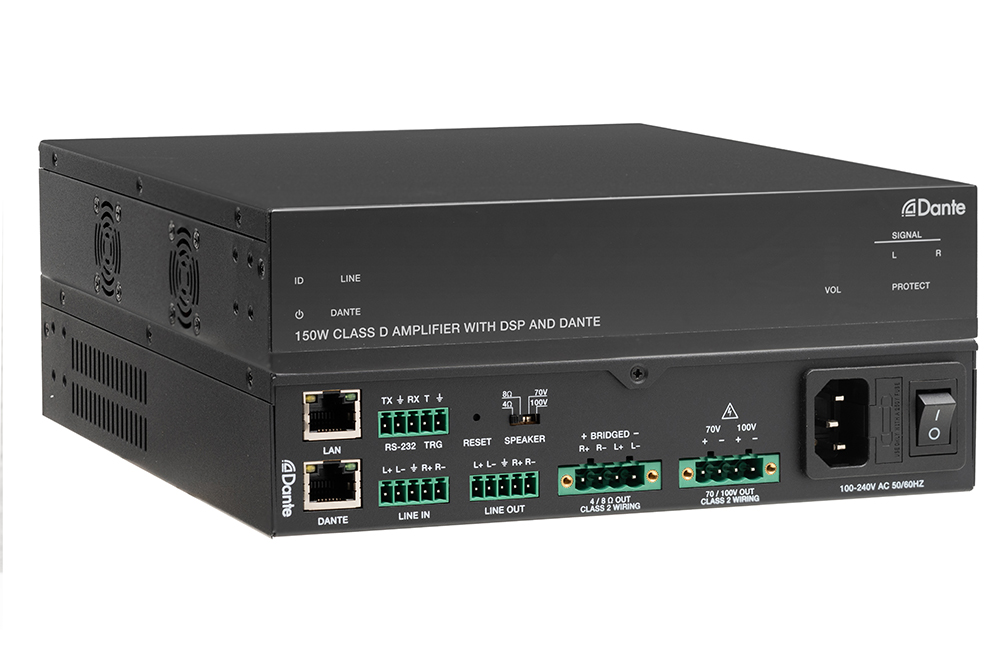
Setup Guide Configuring Your Network Switch for Dante Required switch settings for all KanexPro AUD-DTE- Dante products Dante requires a managed…
KanexPro sells direct to dealers, resellers, installers and integrators, and through distribution. Whichever way you buy, the same engineers answer the phone.
The trade store: your own account, live stock, reordering, and a first look at new products.
Go to the trade store →Distribution and authorised resellers across the US and beyond.
See where to buy →Design help on extenders, matrix and AV over IP before you spec it.
Ask an engineer →