Downloading KanexPro software and firmware safely
How KanexPro checks firmware and software downloads, how to verify a file's SHA-256 fingerprint, what the Windows SmartScreen warning means, and…


Architecture, Scalability, Latency, Image Quality & Network Requirements
AV distribution has reached an inflection point. For decades, integrators designed around fixed-configuration HDMI matrix switchers — deterministic, reliable, and well-understood. AV over IP presents a compelling alternative: scalable, software-defined, and built on standard network infrastructure. This guide provides a technical framework for evaluating both architectures across the dimensions that matter most in a real installation.
Scaling a traditional matrix is a hardware replacement decision. AV over IP scales linearly — adding a source or display requires one new endpoint and one switch port. Systems with hundreds of endpoints are routinely deployed on a single flat network.
Verdict: AV over IP wins decisively on scalability. For installations expected to grow, AV over IP eliminates the risk of outgrowing the matrix.
| Technology | Latency | Notes |
|---|---|---|
| Traditional HDMI Matrix | ~0ms | No encode/decode pipeline |
| SDVoE (10G) | ~0ms | Uncompressed, bit-perfect, frame-synchronous |
| JPEG2000 (1G) | ~1 frame (~16ms @ 60Hz) | Visually lossless, imperceptible in most applications |
| H.265 (1G) | 60–200ms typical | GOP-based — unacceptable for interactive use |
Verdict: Traditional matrix and SDVoE are equivalent at zero latency. JPEG2000 is acceptable for nearly all AV applications. H.265 is limited to passive signage.
| Technology | Compression | 4K60 4:4:4 | HDR |
|---|---|---|---|
| Traditional HDMI Matrix | None | Yes (HDMI 2.0) | Yes |
| SDVoE | None | Yes | Yes |
| JPEG2000 | Visually lossless | Yes | Yes |
| H.265 | Lossy | Yes | Limited |
JPEG2000 and SDVoE are indistinguishable from traditional matrix at normal viewing distances. H.265 introduces visible artifacts on high-motion 4K content.
Traditional matrix requires no network configuration. AV over IP requires a managed switch with:
Verdict: Traditional matrix wins on network simplicity. In environments with IT support, AV over IP network requirements are manageable. Without dedicated IT, traditional matrix reduces operational risk.
Continued in Part 2: Distance, Control, Expansion & Decision Guide
How KanexPro checks firmware and software downloads, how to verify a file's SHA-256 fingerprint, what the Windows SmartScreen warning means, and…
Boardrooms, conference rooms, campuses, lobbies — real-world deployment scenarios Corporate AV is among the most practical deployment target for…
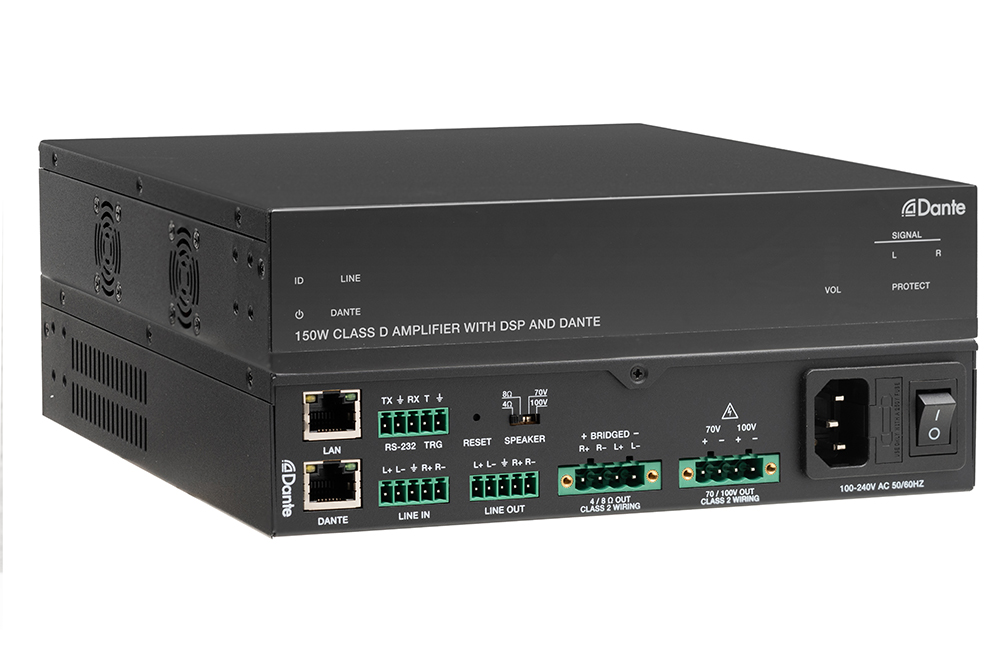
Setup Guide Configuring Your Network Switch for Dante Required switch settings for all KanexPro AUD-DTE- Dante products Dante requires a managed…
KanexPro sells direct to dealers, resellers, installers and integrators, and through distribution. Whichever way you buy, the same engineers answer the phone.
The trade store: your own account, live stock, reordering, and a first look at new products.
Go to the trade store →Distribution and authorised resellers across the US and beyond.
See where to buy →Design help on extenders, matrix and AV over IP before you spec it.
Ask an engineer →