AUD-EARC-8K: eARC Audio Routing, Formats and EDID
The AUD-EARC-8K passes HDMI 2.1 video to the TV and sends audio to soundbar, amp, optical and L/R at once, with no decoding or downmixing.


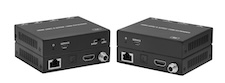 AUD-EXT-EARC100M
HDMI eARC w/ SPDIF Audio over CAT Extender 100m POC
Extend TV Audio to a Remote Soundbar or AVR Over a Single CAT Cable
Product page →
AUD-EXT-EARC100M
HDMI eARC w/ SPDIF Audio over CAT Extender 100m POC
Extend TV Audio to a Remote Soundbar or AVR Over a Single CAT Cable
Product page →
The AUD-EXT-EARC100M is a transmitter and receiver pair that sends a TV's HDMI eARC/ARC audio or its S/PDIF optical audio to a remote soundbar, AVR or multi-room audio system. It carries eARC or S/PDIF audio up to 100m/328ft over a single CAT cable. Bi-directional Power over Cable (PoC) means you only need power at one end.
Applies to: AUD-EXT-EARC100M HDMI eARC w/ SPDIF Audio over CAT Extender
It is for systems where the display and the audio equipment are in different places. Typical examples are a TV on one wall with the AVR in an equipment rack, or a display that has to feed a soundbar or audio system in another room. The transmitter connects to the TV's eARC/ARC port or optical output. The receiver sits at the audio endpoint and outputs the audio on HDMI eARC or S/PDIF optical. It carries audio only and does not carry video.
The transmitter has one eARC IN (HDMI Type A, 19-pin female), one S/PDIF IN (optical audio jack), one CAT OUT (RJ45, female) and a SERVICE port. The receiver mirrors it with one CAT IN (RJ45, female), one eARC OUT (HDMI Type A, 19-pin female), one S/PDIF OUT (optical audio jack) and a SERVICE port.
A front-panel S/PDIF/eARC switch on the transmitter selects which path is active. In eARC mode, the receiver's eARC OUT carries the audio from the transmitter's eARC IN. In S/PDIF mode, the receiver's S/PDIF OUT carries the audio from the transmitter's S/PDIF IN. S/PDIF is an independent optical path for TVs without HDMI eARC.
Lossless and object-based formats such as Dolby TrueHD, DTS-HD MA and Dolby Atmos are carried only when the TV connects over eARC. A TV that offers only ARC, or a connection made over optical, is limited to the ARC or S/PDIF format list.
Yes, but only in eARC mode. CEC is passed through when HDMI eARC mode is selected, so device control is kept across the link. The TV must have ARC/eARC and CEC enabled in its settings. CEC is not carried in S/PDIF mode.
No. PoC is bi-directional, so the single 12V/1A locking power adapter in the box can connect to either the transmitter or the receiver, and power reaches the other unit over the CAT cable. Put the adapter wherever an outlet is easiest to reach, at the TV side or at the amplifier side.
Use Cat6, Cat6a or Cat7 UTP/STP cable, terminated straight-through (T568B at both ends). The maximum run for eARC or S/PDIF audio is 100m/328ft. Do not use crossover cables. Shielded (STP) cable is recommended where there is high electromagnetic interference.
One HDMI Audio Extender transmitter, one HDMI Audio Extender receiver, one 12V/1A locking power adapter and one user manual.
| Specification | Value |
|---|---|
| Transmission Distance | 100m / 328ft |
| ESD Protection | IEC 61000-4-2: ±8kV (air-gap) & ±4kV (contact) |
| Power Supply | AC 100-240V 50/60Hz → DC 12V/1A (CE/FCC/UL) |
| Power Consumption | 5.65W (Max) |
| Dimensions | 90mm (W) x 72mm (D) x 20mm (H) - TX & RX each |
| Weight | 184g (TX/RX each) |
| Operating Temperature | 0-40°C / 32-104°F |
| Relative Humidity | 20-90% RH (non-condensing) |
| Regulatory | CE, FCC, UL |
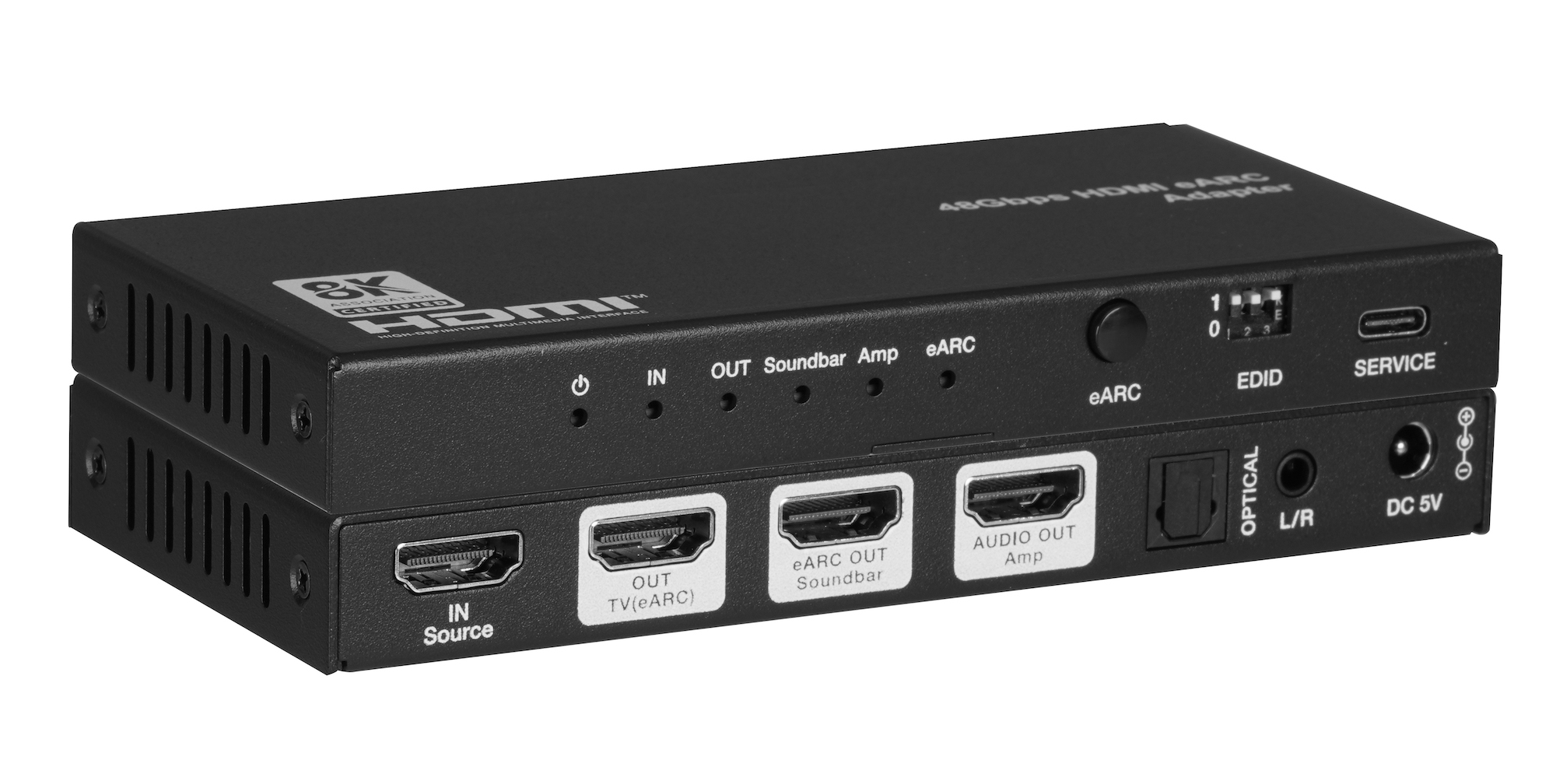
The AUD-EARC-8K passes HDMI 2.1 video to the TV and sends audio to soundbar, amp, optical and L/R at once, with no decoding or downmixing.
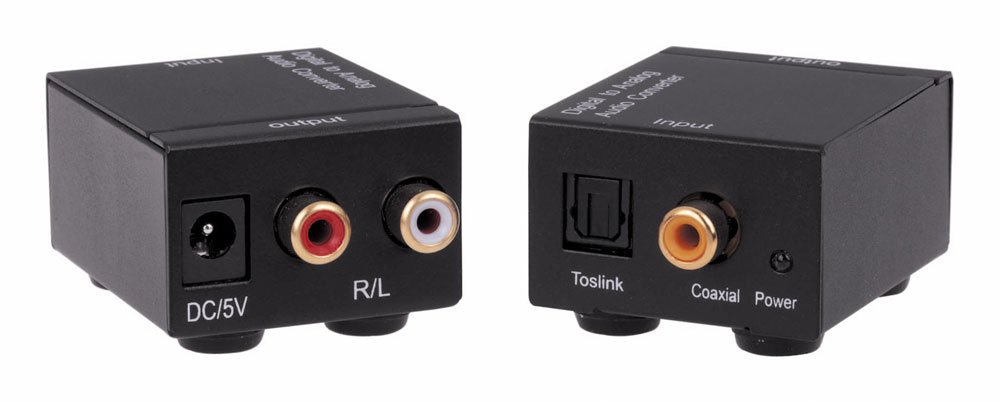
The AUD2ACV converts optical TOSLINK or coaxial S/PDIF audio to analog stereo on RCA R/L at 48 kHz, powered by an included 5V 1A supply.
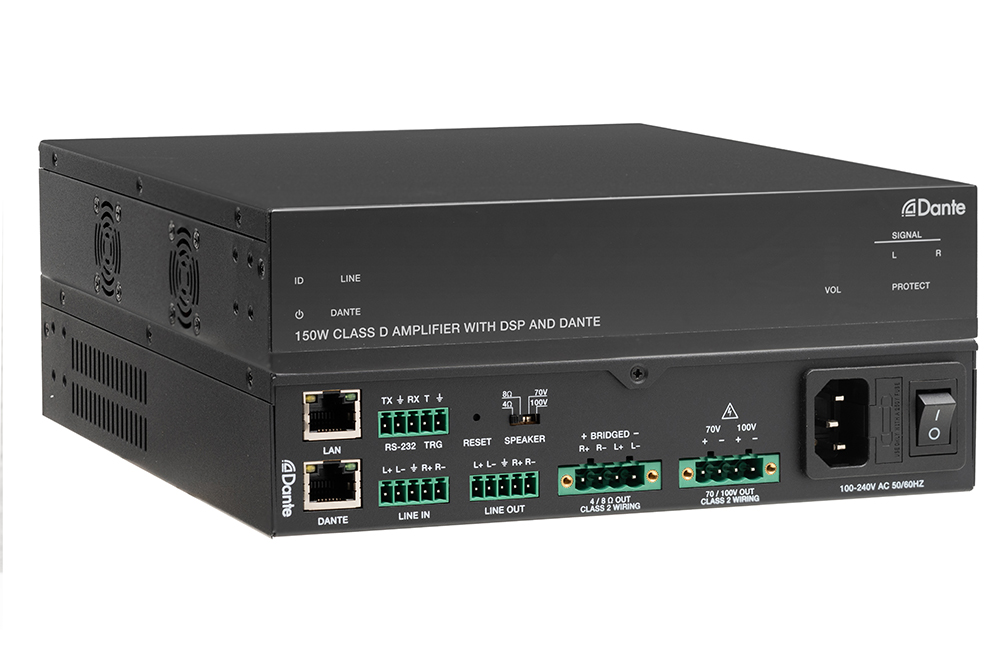
Boardrooms, conference rooms, campuses, lobbies — real-world deployment scenarios Corporate AV is among the most practical deployment target for…
KanexPro sells direct to dealers, resellers, installers and integrators, and through distribution. Whichever way you buy, the same engineers answer the phone.
The trade store: your own account, live stock, reordering, and a first look at new products.
Go to the trade store →Distribution and authorised resellers across the US and beyond.
See where to buy →Design help on extenders, matrix and AV over IP before you spec it.
Ask an engineer →